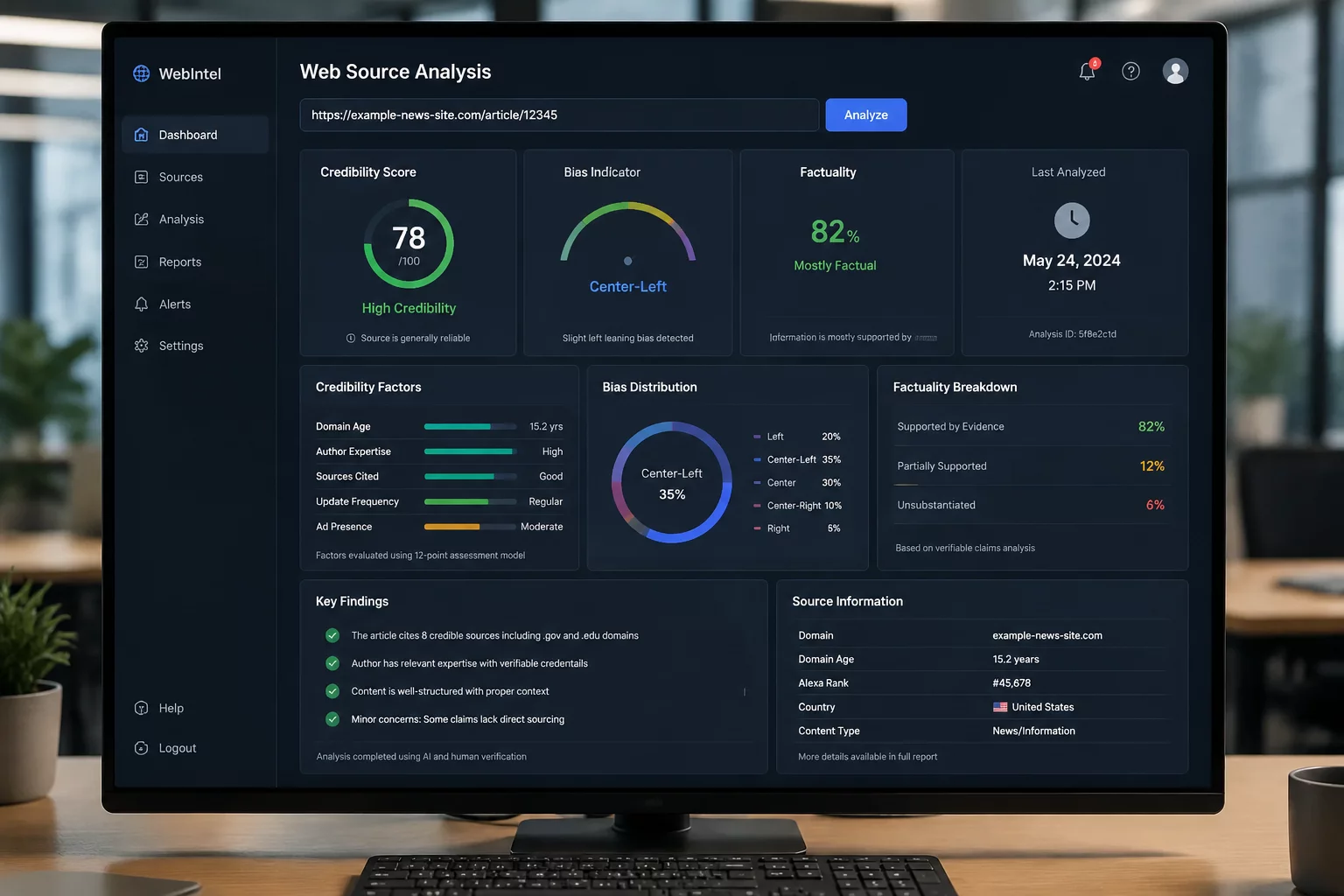
Overview & Functional Scope
The Source Analyzer serves as an auditable verification engine designed to evaluate web sources, identify underlying evidentiary materials, and reveal hidden dependencies between published articles. When multiple outlets publish near-identical headlines, researchers often mistake widespread repetition for independent corroboration. This utility systematically compares phrase density, citation hyperlinks, and publication timestamps to determine whether twelve distinct articles represent twelve verified findings or merely twelve rewrites of one solitary press release.
Methodological Workflow & Integrity Verification
Every analyzed document undergoes multi-tier parsing. The algorithm checks initial publishing timestamps, extracts inline links to primary studies, and identifies attribution breaks where secondary commentators drop crucial research caveats. By isolating direct quotes from editorial interpretations, researchers can pinpoint exactly where factual claims began drifting from the original records.
Operational Criteria
The framework enforces four foundational principles: raw provenance priority, context insulation, chronological anchoring, and conflict transparency. In practice, claims unsupported by direct empirical trails receive lower authority scores, whereas claims with verifiable primary data maintain strong reliability indicators throughout analysis.
Strict validation of digital provenance with zero tolerance for uncited secondary assertions.
Isolates qualifiers, technical limitations, and scope statements to eliminate out-of-context headlines.